EXECUTIVE SUMMARY. The University of Michigan Health System (UMHS) Laundry Services Department has been. 9E, 4D, 9W, 6C, and 8B. Units with the highest waste impacts (above 3.0) were 6A, 6B, 5D, and 8D. Furthermore, 40% of the wasted linens in C&W were bath towels.
« Previous: Front MatterThis report addresses the question of what terrorists hold in value, a question asked in order to assess some means and strategies for deterring, deflecting, or preventing terrorist activities. We approach the question at several levels, moving from the use of short-term deterrent strategies to the modification of the broader contexts and conditions conducive to terrorist activities in the long run. We focus on contemporary Islamic terrorism but deal with generic dimensions in many instances.
The report does not address domestic, or homeland, aspects of terrorism, which are covered in detail in two National Academies reports, Making the Nation Safer: The Role of Science and Technology in Countering Terrorism (National Research Council, 2002) and Terrorism: Perspectives from the Behavioral and Social Sciences (National Research Council, in press). Nor does it recommend policy strategies based on the application of its conclusions.
Deterrence as a known strategy is demonstrated to have a positive role in contending with terrorists, though terrorism poses special problems that limit its effectiveness and call for modifications. Among those problems are (a) difficulties in getting unambiguous and credible threats across to terrorists, (b) the unwillingness of terrorists to communicate except indirectly and on their own terms, (c) exceptionally high levels of mutual distrust, (d) uncertainty about how to affect what terrorists value, and (e) uncertainty about the targets to which threats should be directed.
In light of these problems, the best policy may be one of deterrent threats combined with policies of working with and through third parties who may have the capacity to influence
terrorists. Among such parties are state regimes that harbor terrorists, moderate political and social groups in such states, neighboring regimes, and U.S. allies.

Terrorists carry out their activities before a number of different audiences— potential recruits, their own memberships, states and politically interested groupings (“sentiment pools”) in societies in which they operate, the media and its imagined readership, audiences in enemy societies, and the audience of “world public opinion.” These audiences are both sources of potential support and foci of vulnerability for terrorism.
Terrorist organizations are typically far-flung networks that rely on secrecy, invisibility, flexibility, extreme commitment on the part of members, and coordination of military-like activities as their trademarks. These features are sources of both strength and vulnerability.
Moving to broader contexts and conditions, we identify three factors that help explain the rise of terrorism as a form of activity: the great asymmetry of economic, political, and military power in the world; the availability of weapons of mass destruction; and the permeability of world society occasioned by processes of globalization.
With respect to political context, terrorism and its supporting audiences appear to be fostered by policies of extreme political repression and discouraged by policies of incorporating both dissident and moderate groups responsibly into civil society and the political process.
With respect to economic and social conditions, many societies that foster terrorism are characterized by high population growth and large numbers of disadvantaged youth and by extreme economic inequality and poverty. When these conditions combine with strong—sometimes religiously reinforced—anti-Western ideologies, a fertile field for supporting terrorism is generated.
The panel ventures the several specific recommendations about deterrence and prevention that follow from our analysis:
Deterrence, understood conventionally as the direct use
of threats, punishments, and inducements to prevent enemy action, has a viable place in dealing with terrorists (supporting text, pp. 8-14).
Many of the assumptions of conventional deterrence, however—availability of channels of communication, credibility among communicating parties, knowing what adversaries value—are not likely to be present in contemporary terrorist situations. As a result, reliance on direct deterrence can be only somewhat effective. In addition, direct threats and perceived overretaliation may have counterproductive effects with respect to generating support for terrorist groups and activities by previously uncommitted audiences (supporting text, pp. 10-14).
Direct efforts to deter should therefore be accompanied by working through all available third parties—societies hosting terrorist organizations, countries trusted by host societies, or the United States’s own allies—who may have more credibility with and influence on terrorist organizations than this country, as enemy, does (supporting text, pp. 14-16).
Whenever possible, policies should be directed toward distancing and alienating relevant audiences from terrorist organizations and activities. The incorporation of potentially extremist political groups into the civil society of actual and potential host societies is especially important (supporting text, pp. 16-22).
Intelligence, infiltration, and related activities should be directed at points of vulnerability of terrorist organizations— their reliance on audience, their ideological inflexibility, their problems of maintaining commitments, and their potential for organizational failure (supporting text, pp. 22-25).
The social conditions fostering the use of terrorism are complex and include demographic, economic, political, and educational factors. In the long run, preventive strategies should include improving these conditions in countries vulnerable to terrorist organizations and activities, as a means of diminishing the probabilities of their emergence and crystallization (supporting text, pp. 25-31).
The one sure conclusion emerging from this report about strategies for countering terrorism is that there are no silver bullets or quick fixes available. It is possible to specify more effective and less effective deterrent and preventive policies at various levels and under different conditions. However, the

general policy approach has to be adaptive, opportunistic, and multisided. The conventional problem-solving logic so attractive in American culture—find a problem and then fix it—is of limited utility, and a longer term, more contextualized approach is necessary.
Having a clear strategic direction and strategic plan with a focused implementation process in place is important. Business success isn’t going to happen by accident. You must look into the future and create a plan for wherever you’re trying to go.
What will your business be like in three years? Do you have a road map to get from today to your envisioned tomorrow? Will you be a few steps closer to realizing your vision by next year? No one can predict the future. But if you don’t change anything, the future won’t be any different than the past.
One sure-fire way to impact your company’s future (and profitability) is to dust off a timeless tool — the strategic plan — and intentionally drive your organization forward. No one strategic model fits all organizations, but the planning process includes certain basic elements that all businesses can use to explore their vision, goals, and next steps of an effective strategic plan. A good strategic plan achieves the following:
Reflects the values of the organization
Inspires action to achieve a big future
Explains how you’ll win in the market
Clearly defines the criteria for achieving success
Tetapi menyatu tidak cukup untuk keluar dari masalah, karena beberapa pengganggu melecehkannya untuk uang. Dia telah menjalani hidup dengan menghindari segala bentuk konfrontasi dan menyatu dengan kerumunan. Magi sinbad no bouken dungeon ball sub indo indonesia.
Guides everyone in daily decision making
Effective leaders aren’t sitting around waiting for something to happen. They’re anticipating what lies ahead. Managers and business owners aren’t waiting for their competitors to swoop in and put them out of business. Instead, they’re using their strategic plans to get ahead of the game.
So the fact that many people avoid strategic planning because they consider it complex, costly, and time-intensive is just odd. Most of the time, businesses shelve the plan before it can be implemented, even knowing that some other company may invade their market.
Consider the following statistics from the Balanced Scorecard Collaborative:
95 percent of a typical workforce doesn’t understand its organization’s strategy.
90 percent of organizations fail to execute strategies successfully.
86 percent of executive teams spend less than one hour per month discussing strategy.
60 percent of organizations don’t link strategy to budgeting.
So what’s the upshot of these surprising revelations? Strategic planning matters to the life of your business.
Strategic planning doesn’t have to be mysterious, complicated, or time-consuming. In fact, it should be quick, simple, and easily executed. And strategic planning isn’t just something you cross off your list of to-dos — you must create a culture of strategic thinking, so your strategic planning doesn’t become an annual retreat but, instead, a part of daily decision making.
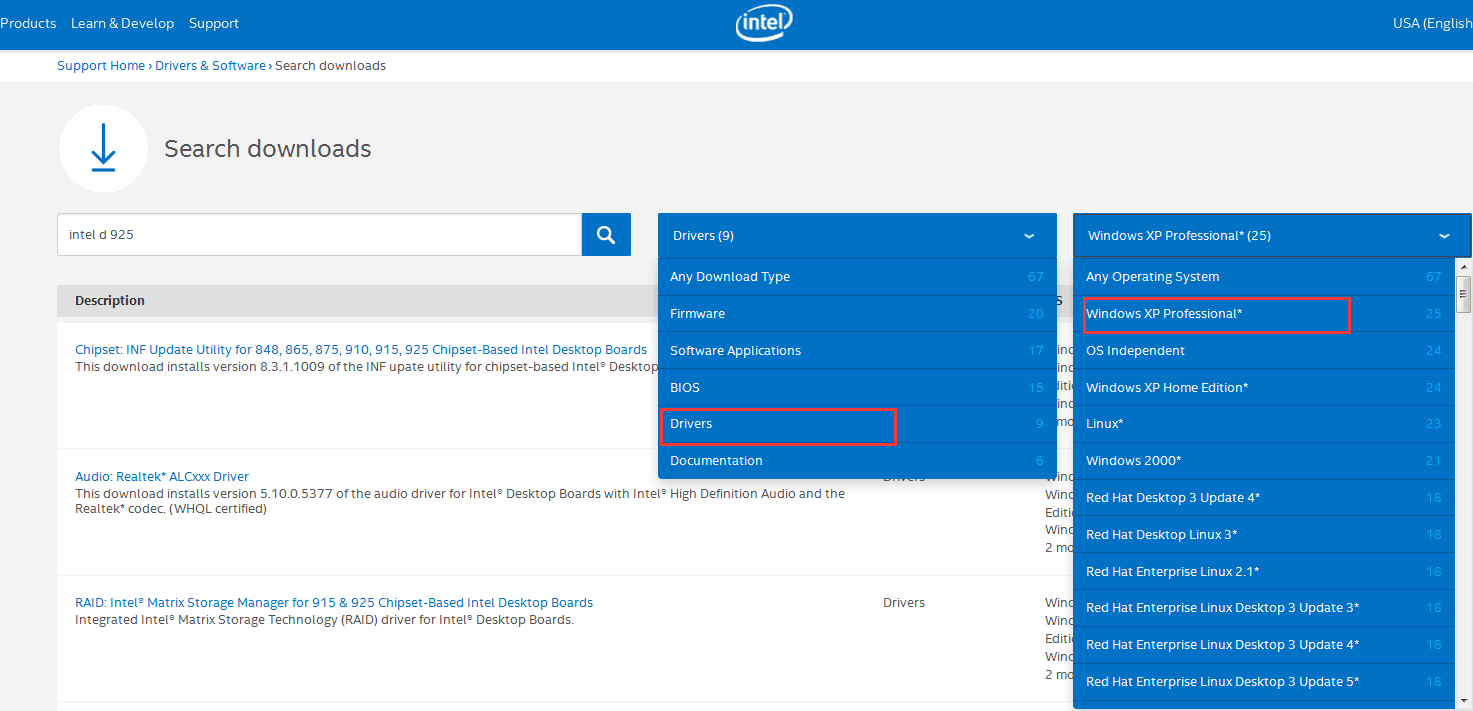
HD Intel panther point pch – high definition audio controller can sense the presence of an audio dongle. Consumers also want the ability to play back two different audio tracks simultaneously, such as a CD and a DVD, which can’t be done using current audio solutions. This download provides the Realtek. High Definition Audio Driver for the 3.5mm audio jack on Intel® NUC Kit. This audio driver is required if you plan to connect a microphone or headset to the audio jack. If connecting to a TV or monitor using an HDMI or DisplayPort cable, the audio is provided through the graphics driver available for your Intel® NUC product. Not sure if this is the right driver for your Intel® NUC?